Australian cancer research reaches human trials with support from ACRF-funded infrastructure
A new Australian-developed antibody designed to target a protein found in ovarian, bladder, pancreatic and breast cancers has reached an important research milestone, with the first patients now participating in a clinical imaging trial.
The research, led by Professor John Hooper from Mater Research and developed through collaboration with researchers, clinicians and national research facilities across Australia, is investigating the safety of an antibody known as 10D7 and how it travels and distributes throughout the body in people with advanced cancer.
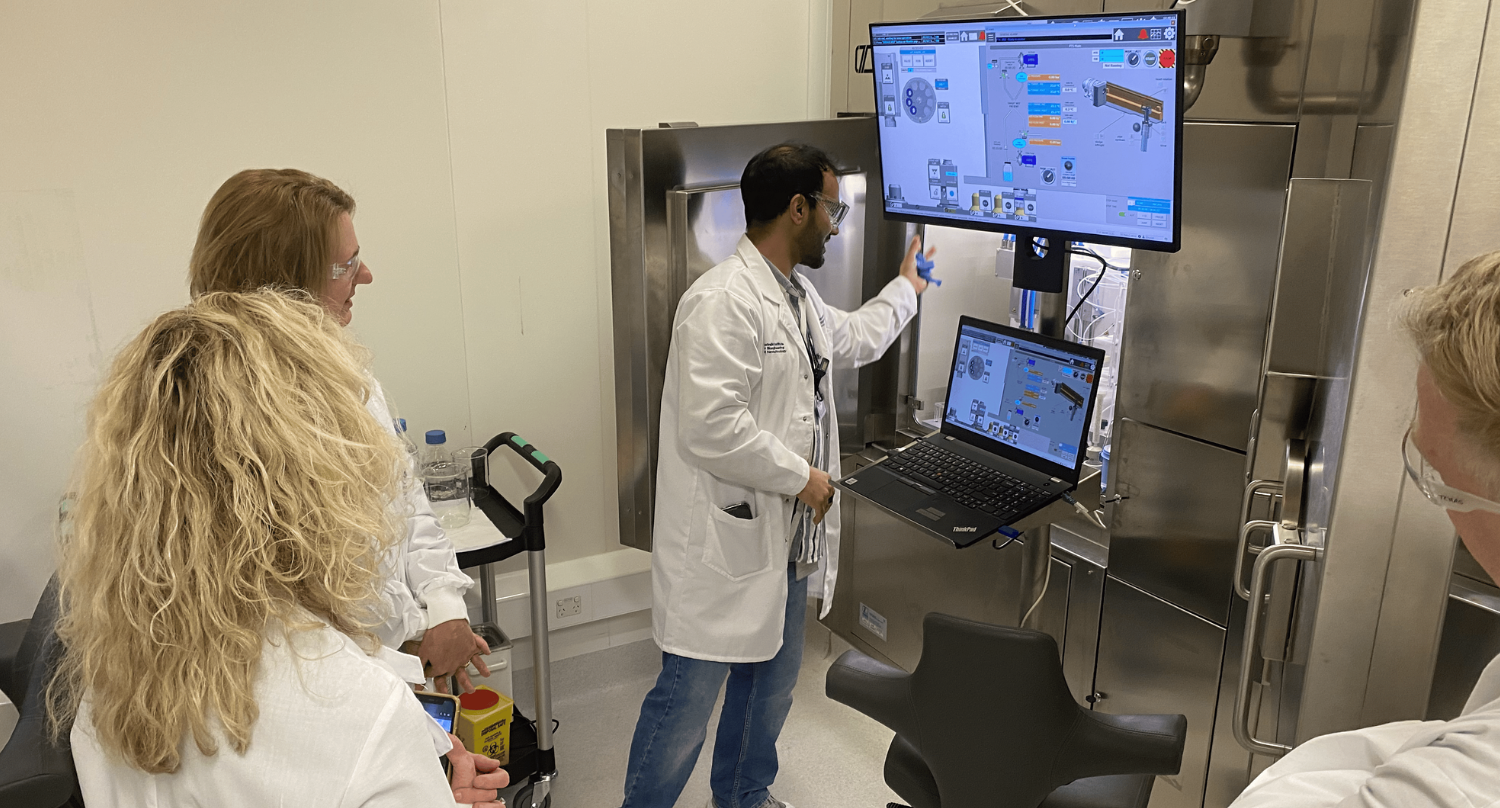
The work has been supported by a broad network of specialist research infrastructure, including the ACRF Facility for Targeted Radiometals in Cancer (AFTRiC) at The University of Queensland’s Centre for Advanced Imaging, which is part of the Queensland Node of the National Imaging Facility (NIF).
Established with support from the Australian Cancer Research Foundation (ACRF), AFTRiC provides researchers with specialised capability in the development and translation of new radiopharmaceutical approaches for cancer.
From laboratory research to human trials
Professor Hooper and his collaborators have spent years developing 10D7, an antibody that targets a protein called CDCP1.
CDCP1 is found in a range of cancers, including ovarian, bladder, pancreatic and breast cancer. The ability of 10D7, labelled with the radioactive isotope zirconium-89, to identify tumours using PET imaging has already been demonstrated in preclinical models. The current clinical trial is investigating whether 10D7 is safe to use and how it is distributed through tumours and normal organs in people with cancer.
Up to nearly 80 people with advanced cancer of the ovary, bladder, pancreas or breast are expected to participate in the imaging study. While the research is still at an early clinical stage, the trial is an important step in understanding whether 10D7 could benefit other patients with cancers that express the CDCP1 protein.
Supporting the research behind progress
The journey from an early-stage scientific discovery to a human trial requires expertise and infrastructure across many areas of research.
Professor Hooper’s work has involved collaboration with specialist research and clinical teams and facilities across Australia, helping progress the antibody towards clinical testing. AFTRiC forms part of this broader research environment, providing specialised expertise and infrastructure to support the development and translation of radiometal-based cancer therapies.
ACRF’s investment helped establish AFTRiC at The University of Queensland’s Centre for Advanced Imaging, creating new capability for Australian researchers working in this emerging area of cancer research.
ACRF CEO Kerry Strydom said it was encouraging to see research supported by Australia’s broader cancer research ecosystem progressing into human trials.
“To see research supported by this broader ecosystem now reaching human trials is incredibly encouraging and demonstrates why investing in world-class cancer research infrastructure is so important.
“While there is still much work to be done, every step that brings a promising new approach closer to patients represents progress.”
While further research is needed to understand the potential role of 10D7, its progression into human trials highlights the long and collaborative process involved in translating laboratory discoveries into clinical research.
Through investments in facilities such as AFTRiC, ACRF helps build the specialist capability and infrastructure that supports Australian researchers as they progress new ideas and innovation through the cancer research pipeline.
This story was sourced from the National Imaging Facility; you can view the article here.
The Centre for Advanced Imaging is part of the research infrastructure housed at UQ’s Australian Institute for Bioengineering and Nanotechnology. The CAI, Herston Imaging Research Facility and Q-TRaCE comprise the Queensland Node of the National Imaging Facility that have supported the radiochemistry and advanced human imaging throughout.
Related news
Read more
University of Sydney launches Australia’s new ace against cancer
Research offers new hope for people living with rare blood cancers